Describe the network your freight actually uses.
Connect service zones to your own facilities and the areas handled by partners. Use those connections when routing freight between collection, depot and delivery activities.
Keep lane rates, minimums, weight bands and fuel settings with the network profile your booking team prices against.
Explore networks and rate cards →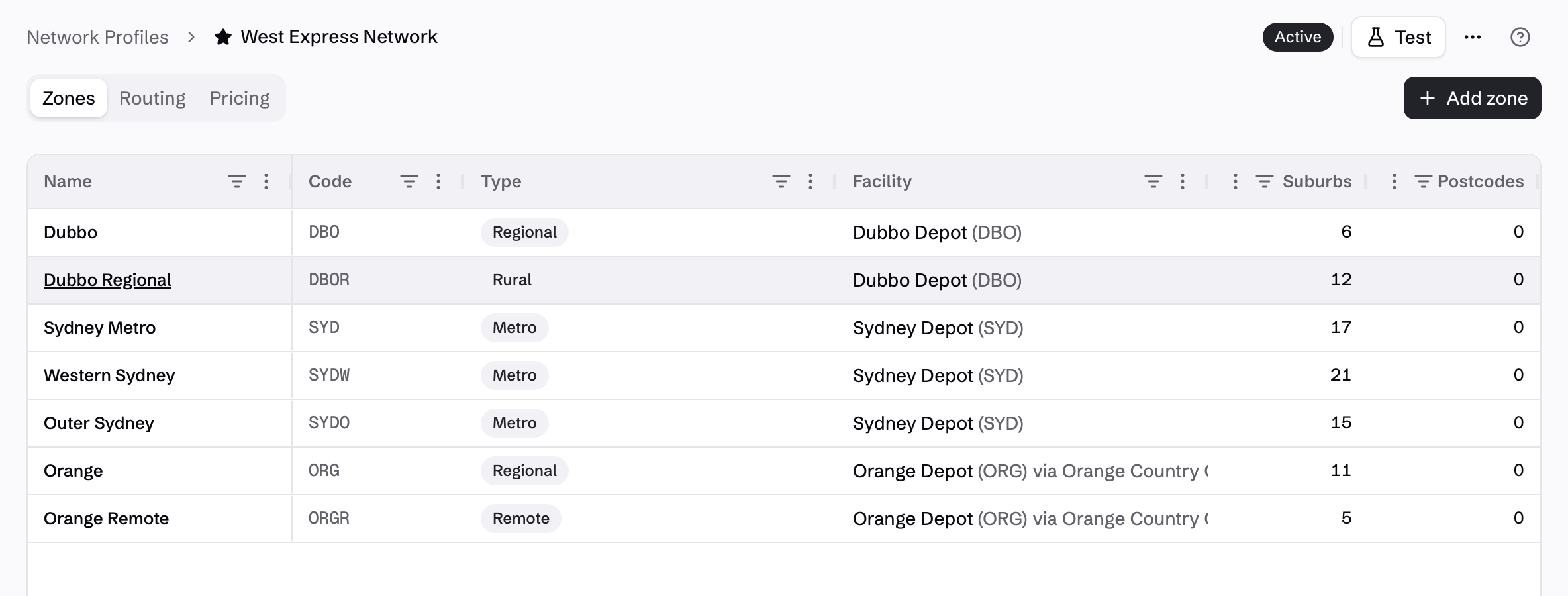
See local and linehaul work together at the depot.
Plan outstanding freight alongside assigned runs and trips. Local pickup and delivery work can sit with depot-to-depot linehaul, while each consignment retains the route and item history behind it.
When a missort or off-route scan needs attention, dispatch can open the consignment, review its planned path and decide the next move.
See freight dispatch →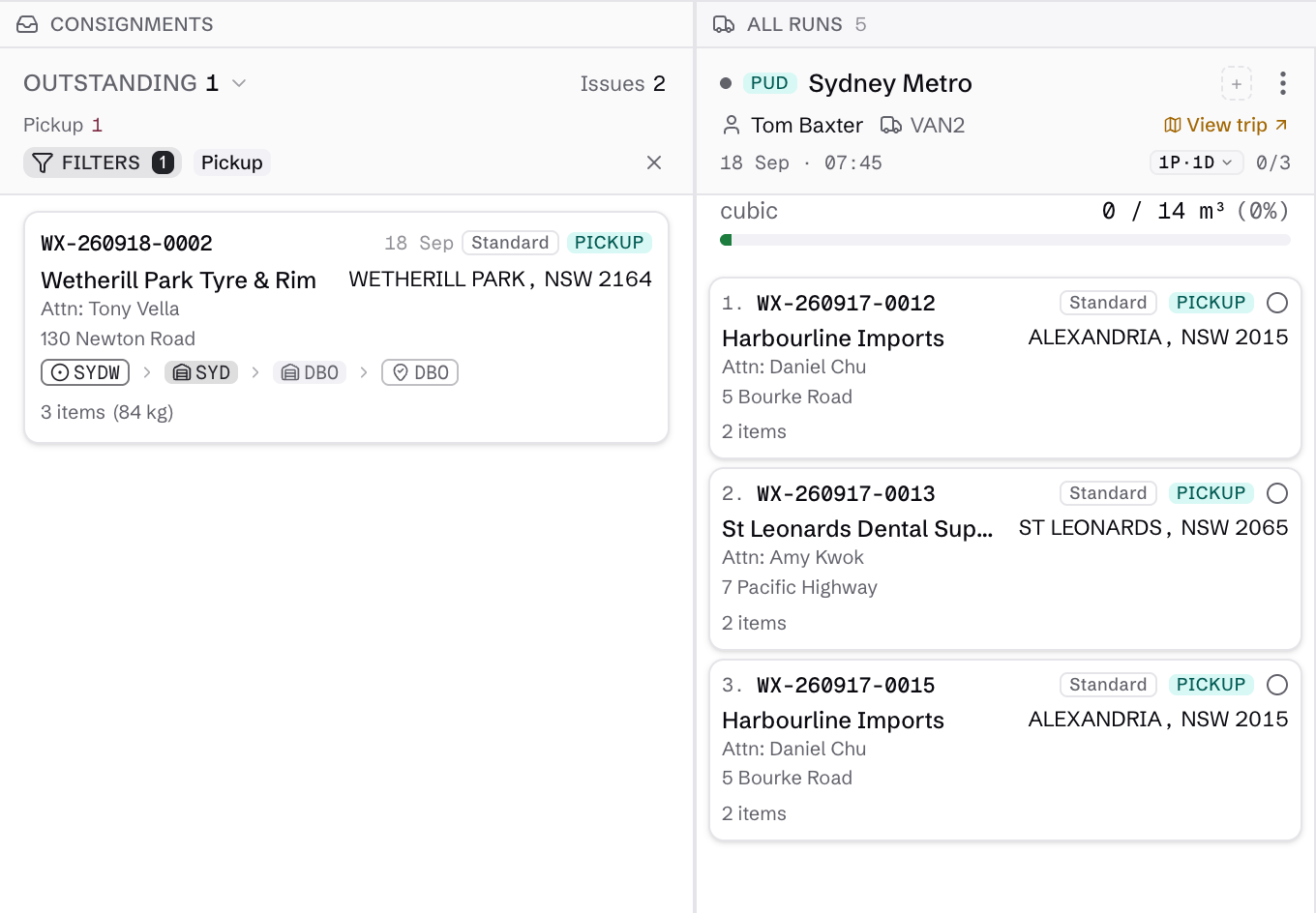
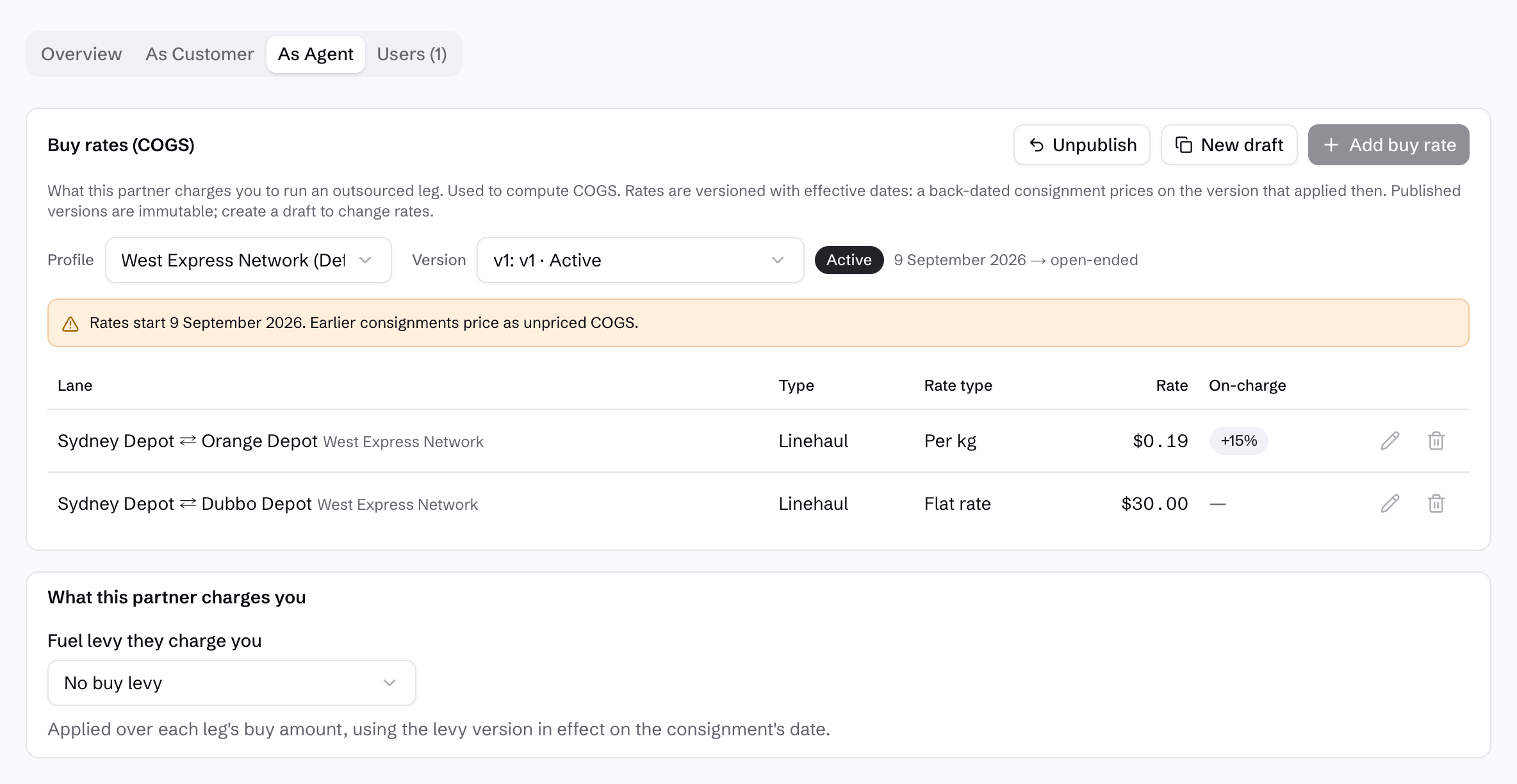
Keep partner costs separate from customer prices.
A partner can give you freight and carry freight for you. Configure the sell side and buy side separately, with lane costs, fuel and any agreed on-charge kept clear.
Effective-dated rate versions help the job use the agreement that applied when the freight moved, while the invoice retains its own customer-facing charge breakdown.
See carrier partner rates →See invoicing and accounting →