
Connect your service areas to your depots.
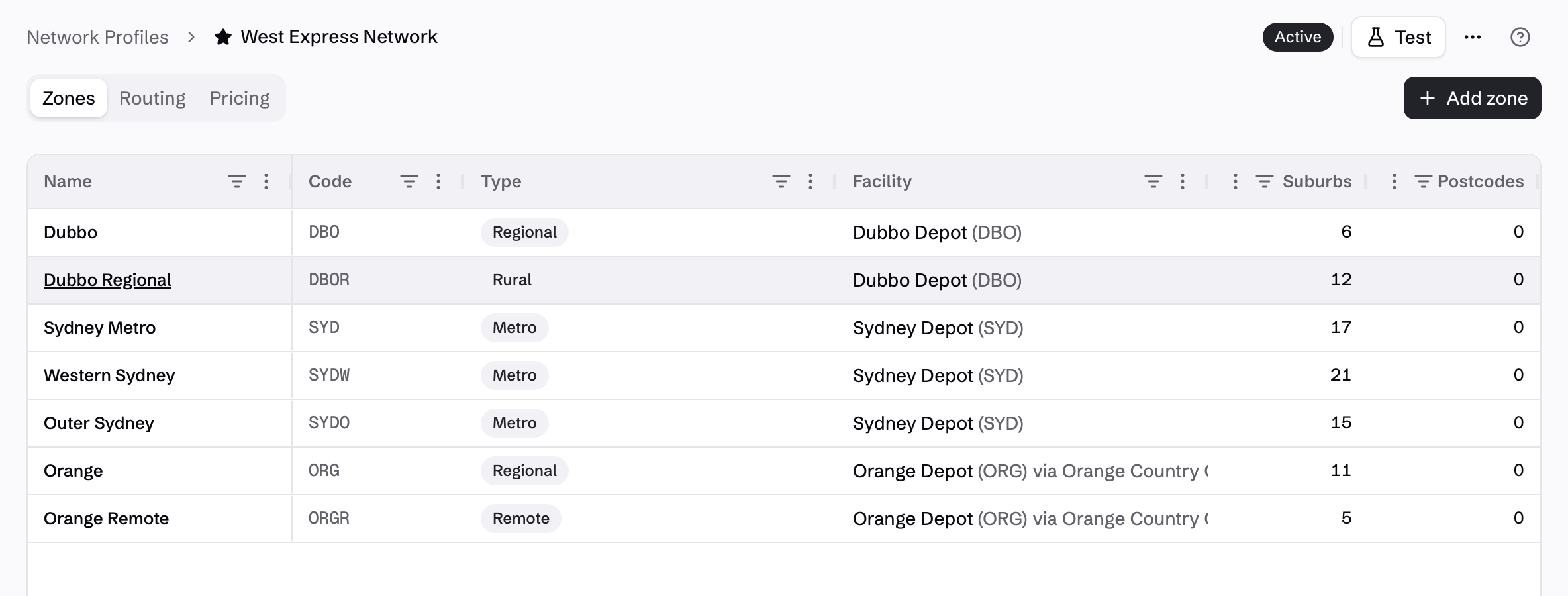
Group suburbs and postcodes into zones and connect each zone to its facility. Keep your own depots and the areas served by a partner in the same network profile.
Connections describe the work between facilities. Test a route while setting up the network, before your team relies on it for bookings.
Set the rules once. Use them throughout the job.
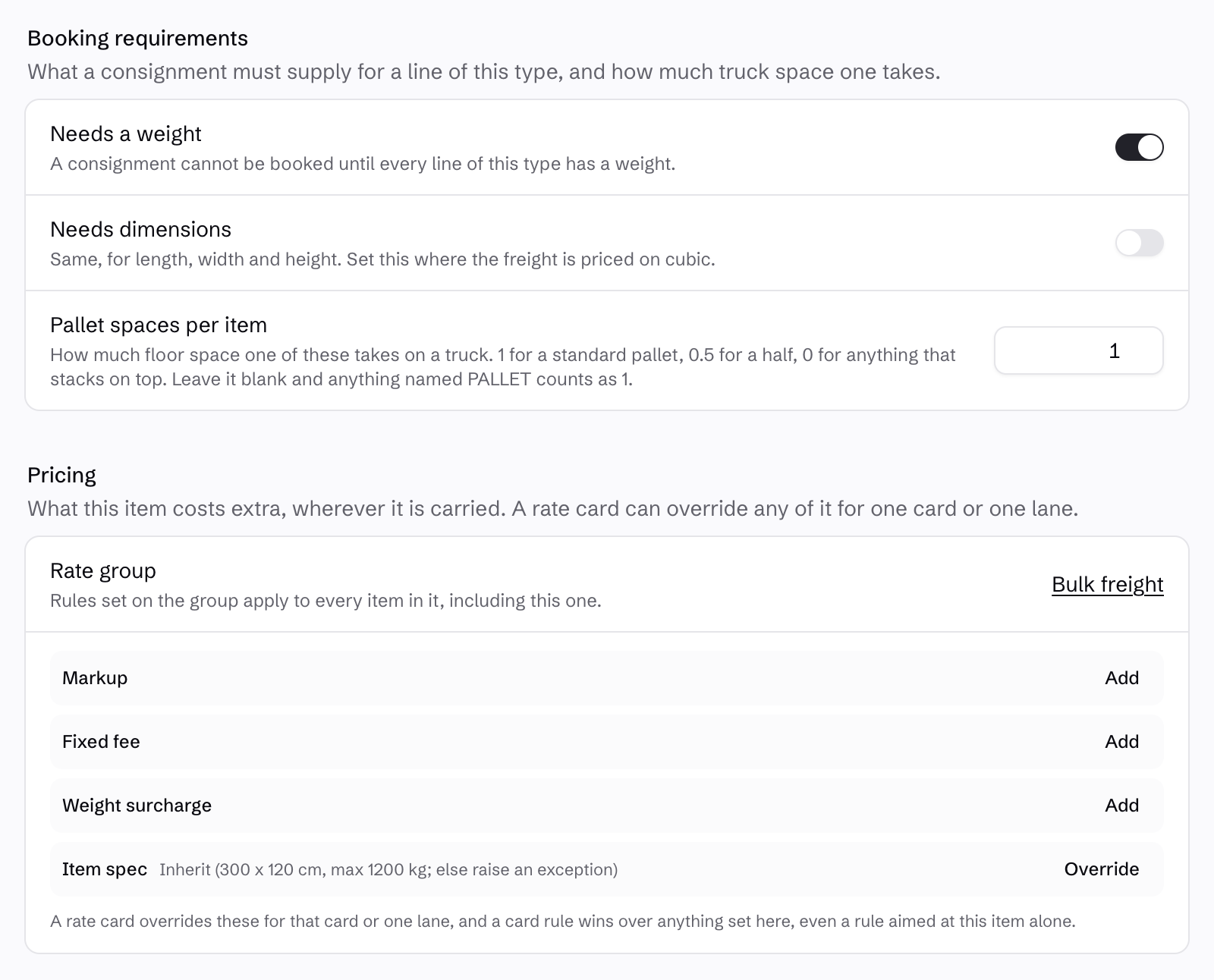
Define the freight you carry, the information each booking needs, and the extra charges that apply. Group similar items to share pricing rules, then use item, rate-card or lane overrides where agreements differ.
Required weights help stop incomplete bookings. Item specifications can raise exceptions for freight outside your limits. Declared services can require approval before the invoice is released.
Choose required weights and dimensions, pallet-space usage and item-specific pricing rules.
Price the freight you actually move.
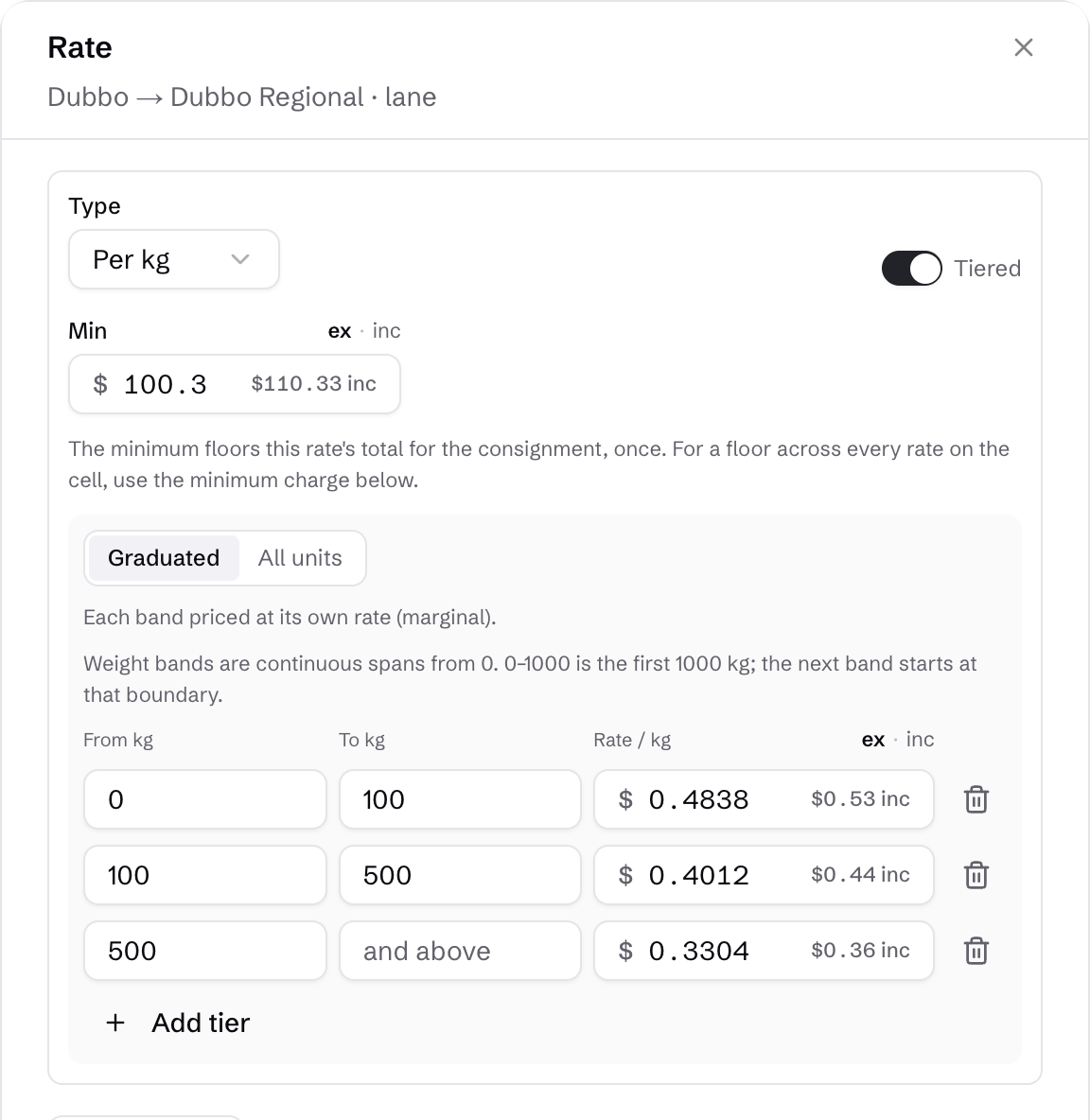
Use the rate type that suits the work, including per-item and per-kilogram pricing. Set a minimum price and weight bands for bulk freight, rather than forcing every booking into one flat rate.
Graduated tiers price each weight band at its own rate. All-units tiers apply the selected band’s rate to the whole quantity. Choose the tier method and minimum that match your agreed rates.
See each band in the booking price.
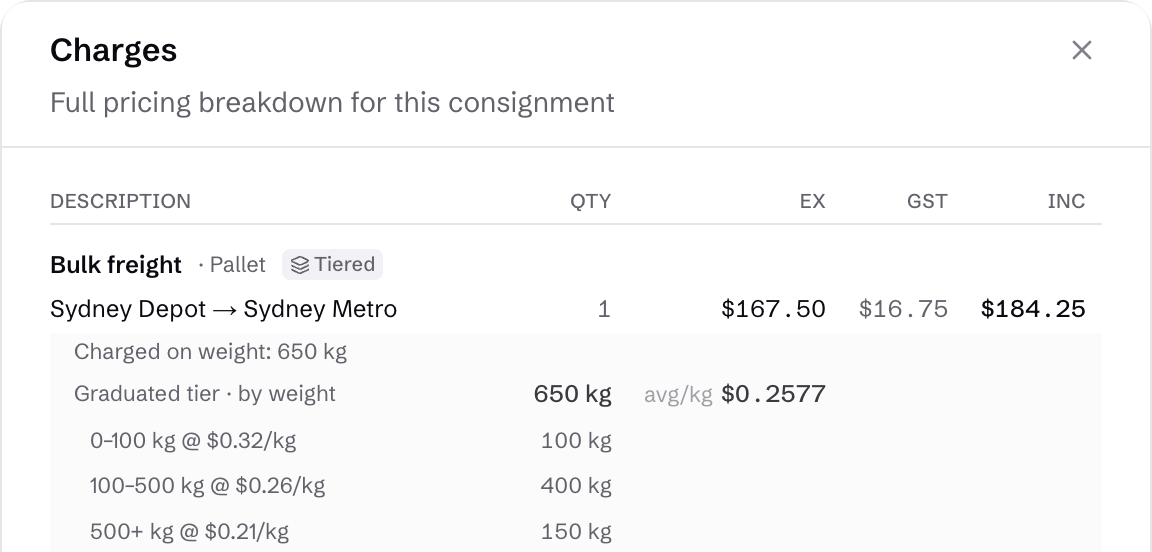
The charge breakdown shows the weight assigned to each band. For this 650 kg pallet, one local freight component prices the first 100 kg at $0.32, the next 400 kg at $0.26 and the remaining 150 kg at $0.21.
That component comes to $167.50 ex GST. Linehaul, the other local component and fuel levy contribute separately to the full consignment price.
Keep customer prices and partner costs clear.
Use customer rate cards for negotiated prices. Check selected partner buy rates and any on-charges alongside them, so the cost of outsourced work is understood before the freight moves.
Use versions and effective dates to control rate changes. Check regular jobs, unusual freight and minimum charges before putting a new rate into use. The consignment and invoice breakdowns show how the charges add up.
See partner rates and costs →Explore linehaul networks →See the invoice pricing breakdown →